
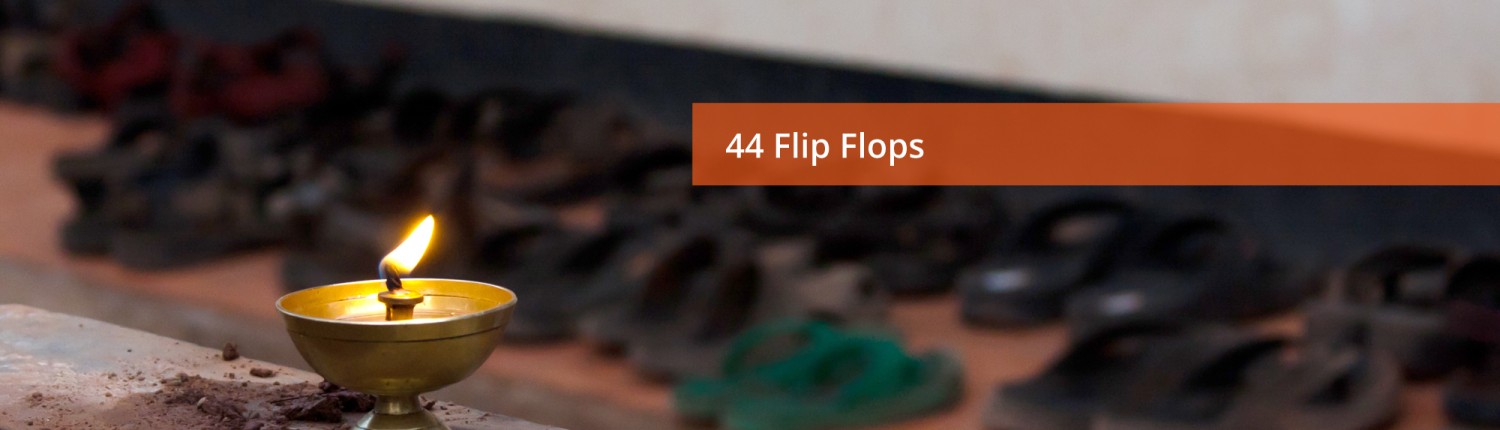
Forty-Four Flip-Flops Project

While traveling to Kerala, India, in February 2014 to visit my teacher (Amma), I was taken to a small orphanage that was home to 22 children.
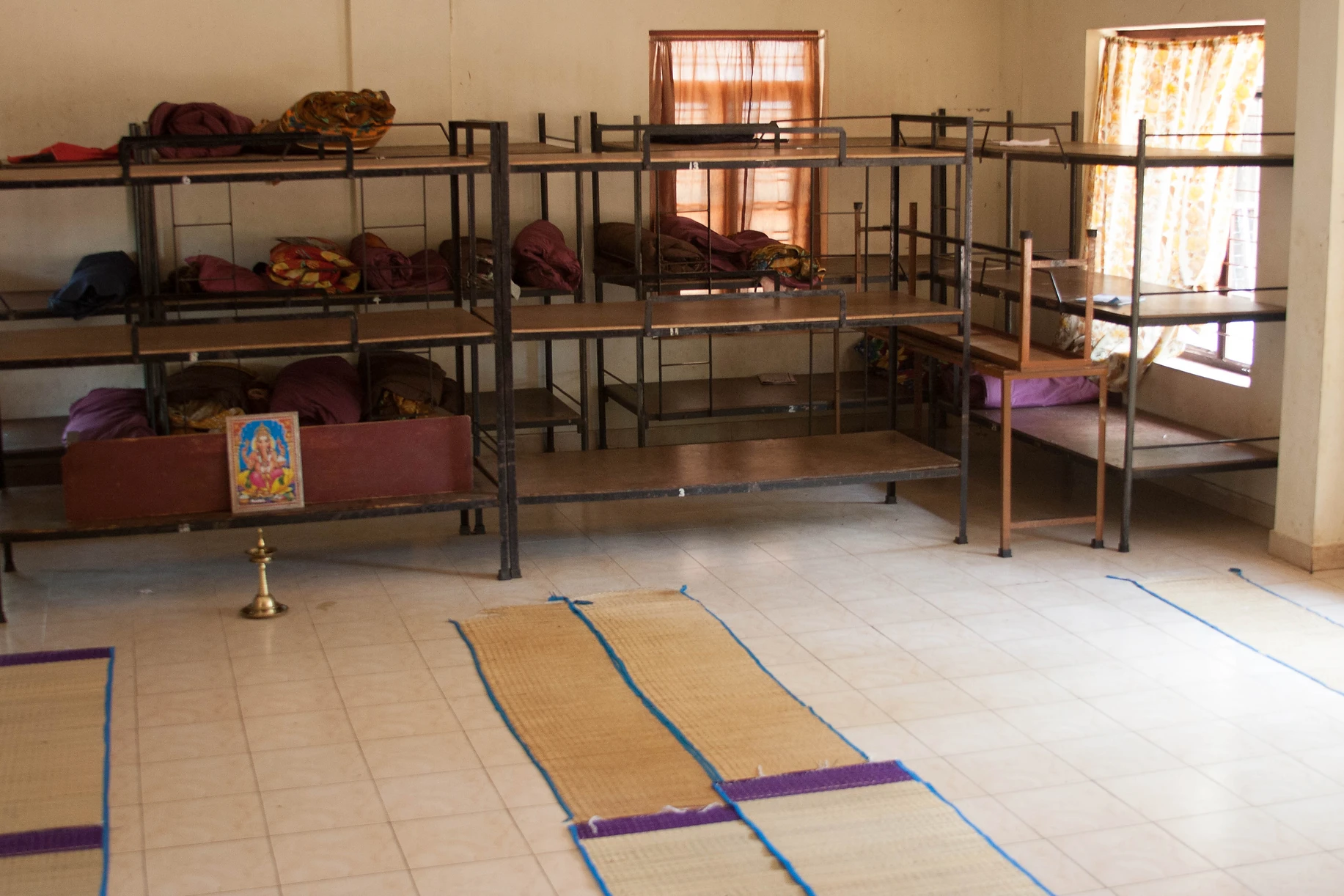
The building was a simple, shack-like structure. The approximately 80-by-60-foot ground floor was divided into four cramped areas: an office, a classroom, sleeping/study quarters, and a small kitchen. Wooden triple bunk beds with rolled-up mattresses occupied nearly half of the common room. The study area consisted of just two or three small wooden tables with two chairs each. The “classroom” had little more than floor pillows.
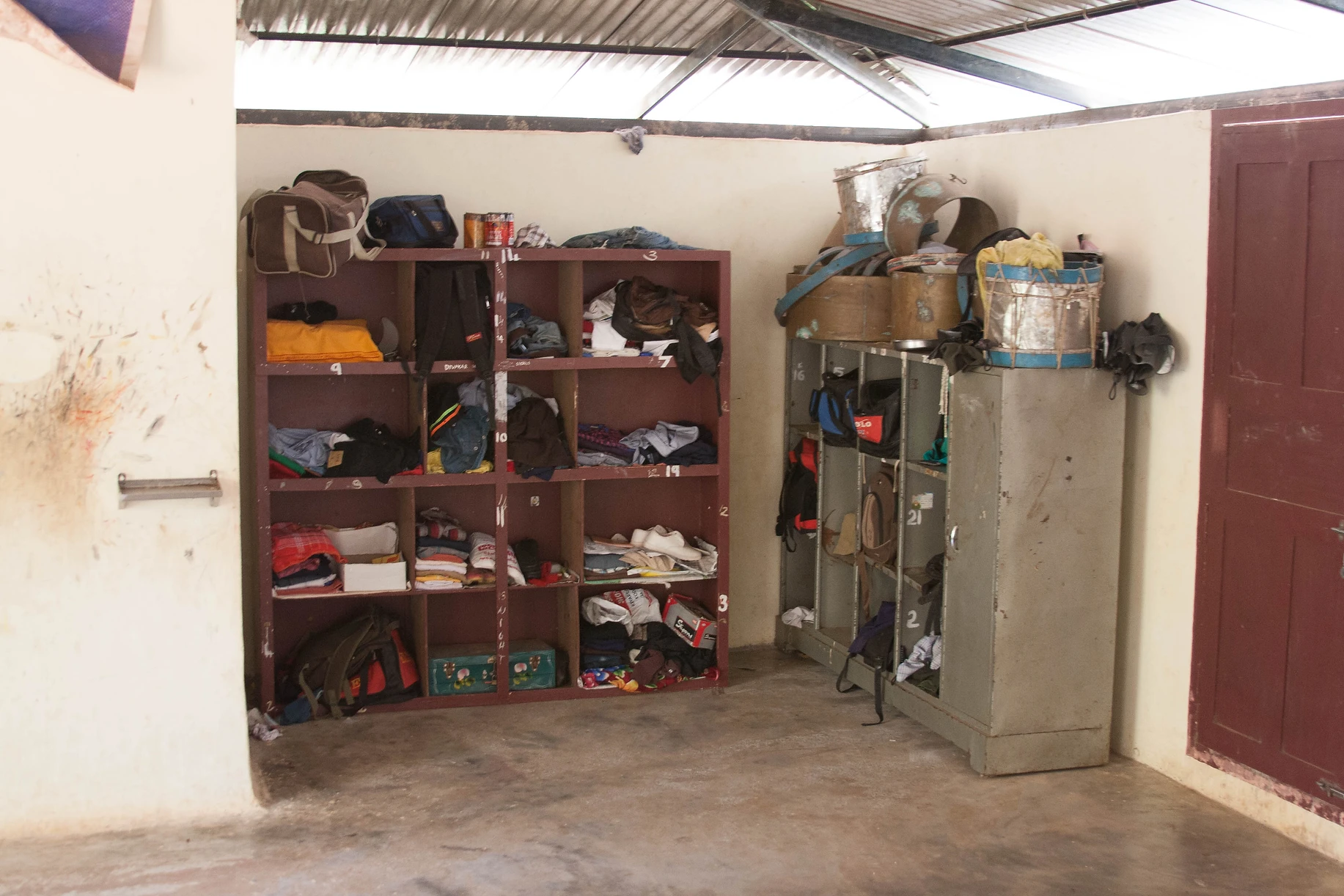
 The second floor was even more basic. It consisted of a roof, a half-wall around the perimeter, and ropes strung up for drying clothes. The children’s personal belongings were stored in mesh bins, similar to the paper wastebaskets commonly used in the West. There were no closets, hangers, or anything that provided much in the way of personal space or privacy.
Until that visit, I had only heard about places like this or read about them in books such as Three Cups of Tea. Seeing it firsthand was something entirely different.
After speaking with the principal, I learned that it cost approximately $800 a month to cover the orphanage’s basic operating expenses—including food, rent, electricity, and the salaries of the three people who ran the entire operation.
I donated enough to cover a month’s operating expenses. I received the customary “Namaste,” but then something unexpected happened. The principal, a man in his 60s, knelt down and touched my feet.
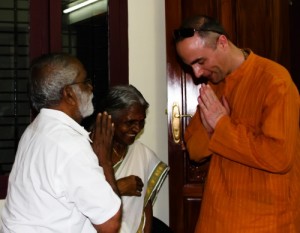
Even though this was a traditional gesture of respect and gratitude in India, but for someone born in Russia and living in the United States, it was quite a shock.
In the Chinese Medicine tradition I practice, shock is considered an experience that initially affects the heart. And that is exactly where this experience landed for me.
I made a commitment to help support $500 of the orphanage’s monthly operating expenses—and have continued doing so ever since.
There are always additional expenses. Boys, in particular, have a remarkable talent for growing out of their clothes, wearing them out, or finding new ways to hurt themselves.
If you’d like to help with these additional needs, no contribution is too small. Your support can help provide clothing and other necessities for this small community.
If you have questions about the project, please email or text the office at 203.533.9463
Thank you for taking the time to learn about this initiative—and for considering helping these children.
How can you help:
- Donate what you can (it costs about $10 a week to support one child). Ways to contribute: Venmo @Mark_Gutkin_acu or Zelle
- Download this flyer and post it in your office break room/cafeteria
- Share https://markgutkin.com/44-flip-flops/ on your social media channels
- Visit the Portfolio page on my Photography Site and let me know if there is a print you’d like to buy. Please refrain from purchasing from the WIX site as the processing is expensive. Venmo or Zelle are preferred.
(11×14 mounted prints – $80, 11×14 stretched canvas – $100, 11×14 framed prints – $120)

Thanks again,
– Mark.